GPS Fleet Tracking for Police Departments: Real-Time Oversight, Officer Safety, and Smarter Dispatch
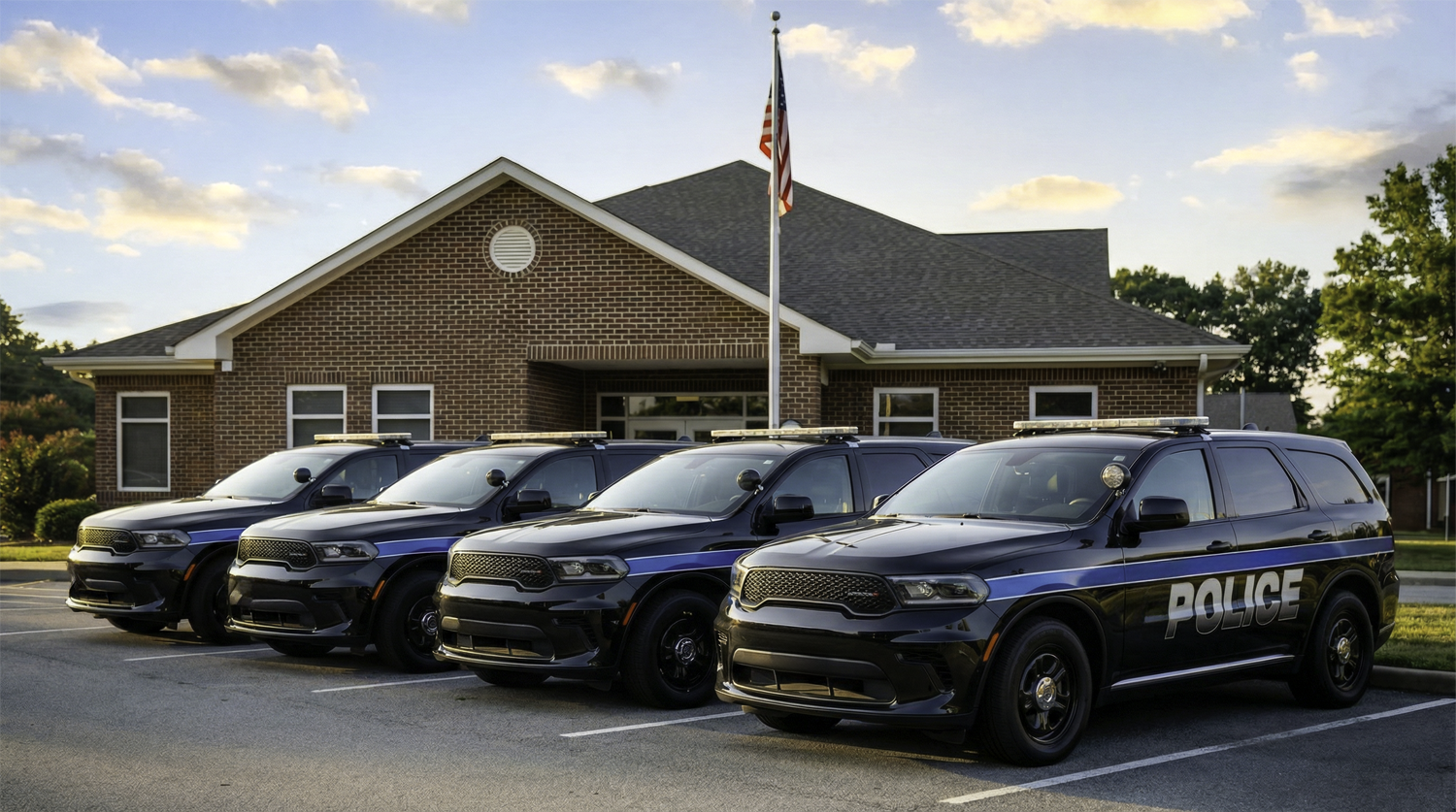
GPS fleet tracking for police departments gives commanders the real-time vehicle visibility they need to improve officer safety, reduce response times, and bring data-driven oversight to every shift. Yet despite advances in public safety technology, many departments still manage their fleets reactively, relying on radio check-ins and verbal updates rather than centralized, live location data.
Dispatchers and watch commanders frequently rely on verbal radio updates rather than live, centralized location data to manage their units.
This creates immediate challenges. Picture a fast-moving incident where a supervisor is desperately trying to locate the nearest available unit for backup. If the dispatch system isn't perfectly synced with everyone's location, or if an officer hasn't had the chance to key the mic, critical seconds can be lost. Along the same lines, during shift turnover, incoming officers often lack clarity on the status, location, and readiness of the vehicles they are about to take onto the street.
For these reasons, GPS fleet tracking for police departments has become a top priority for municipalities across the country. The core value is straightforward. When commanders can see every unit in real time, they make faster, safer, and more informed decisions. These modern systems provide true real-time visibility and ground command decisions in hard data, creating a more efficient and effective police force in the process.
Why Standard Fleet Tracking Falls Short for Police Departments
While many cities and local governments have warmed up to the idea of police fleet tracking, they're also cautious about the system they choose. Managing a police fleet is very different from managing a commercial delivery or service fleet, which many systems are geared toward.
Traditional fleet models assume they're working with linear routes and predictable hours. Municipal police fleet management, on the other hand, is complicated by multi-unit and multi-shift deployments that can happen at any time, or anywhere within the department's jurisdiction.
Imagine a day in the life of a single patrol vehicle. In all cases, it will move unpredictably, as you never know where calls may come from. It may even be asked to cross jurisdictional boundaries in response to long-running pursuits or other calls for help.
To add even more management complexity, no one department’s fleet looks like another. Yours may have a mix of marked patrol cars, unmarked detective vehicles, and specialized K9 units. Others may have two of those three, plus administrative transport vehicles. Solely relying on traditional fleet management systems, computer-aided systems, or radio check-ins provides little centralized visibility.
The result is a visibility gap that standard systems cannot close. Police administrators and commanders cannot easily verify an asset's location at any given moment, how it is being used throughout the day, or whether it is accumulating unusual wear and tear. That gap is exactly what purpose-built GPS fleet tracking for police departments is designed to address.
What Police GPS Fleet Tracking Systems Actually Deliver
Traditional fleet tracking systems frequently fall short when applied to the demands of active patrol operations. Understanding what the right system should deliver is the first step toward making a confident procurement decision.
The first thing to know is that these systems offer far more than basic law-enforcement GPS tracking. Instead, you get a live map of all active units, with supervisor-level visibility across zones, districts, and precincts.
A watch commander, for example, can monitor unit distribution across a city sector from their desk. This enables them, for example, to intuitively observe whether one neighborhood is heavily saturated with coverage while another is left vulnerable.
Police fleet tracking systems also record logs that track a vehicle's every movement throughout the day. These historical logs prove invaluable when it comes time to review an incident. For example, if a complaint is filed or an operational audit is required, command staff can determine exactly where a vehicle was and when it was there.
When police vehicle monitoring is integrated with dispatch operations, the result is a fundamental shift in how commanders lead. Guesswork is replaced by verified, real-time data, and every operational decision is grounded in an accurate picture of where units are and what they are doing.
How Real-Time GPS Tracking Improves Officer Safety and Dispatch Response
Perhaps the biggest selling point for police fleet tracking is its positive impact on officer safety, the most critical metric in law enforcement. These systems are as much about public safety as they are about law enforcement operations.
The safety impact comes down to two measurable factors. The first is how quickly units can be deployed. The second is how effectively officers are supported once an incident is underway. When a distress call goes out, dispatchers no longer have to rely on roll-call style radio broadcasts to find the closest backup. Using the system's live map, dispatch can immediately identify and route the nearest available unit based on real-time proximity. Response times are much faster at this most important of times, when seconds literally count.
During vehicle pursuits or other fast-moving incidents, the command staff can maintain a real-time view of the entire team. Officers who are actively driving at high speeds or dealing with combative subjects can better focus on the task at hand rather than maintaining communications with headquarters.
Dispatch and command teams can monitor the incident flow in the tracking system. By reviewing a live map, they can ensure that the backup is correctly positioned and that the perimeter is secured. This is all accomplished without requiring constant radio updates from the officers involved. The practical outcome is that officers in high-stress situations can stay focused on the incident rather than managing communications, while command maintains full situational awareness throughout.
The Operational Blind Spots Departments Often Miss
The value of police vehicle monitoring becomes clearest when you examine what departments are missing without it. Many of these gaps go unnoticed until a critical failure makes them impossible to ignore.
Consider how vehicles may sit idling for extended stretches during a shift. On the surface, this is a good thing. The neighborhood is quiet, and no calls are coming in. But excessive engine idling burns fuel and causes unnecessary wear. Without real-time oversight, how do you know if idle time is becoming excessive?
Uneven vehicle utilization is another common blind spot. A group of units might cluster in one specific commercial area, leaving residential zones under-patrolled. GPS fleet software corrects this by giving supervisors a live view of unit distribution, allowing them to reposition resources in real time and maintain consistent coverage across all patrol zones. The result is a fleet that actively supports community policing goals rather than drifting toward convenience clustering.
Key GPS Fleet Tracking Features Law Enforcement Agencies Need
What sets a good municipal fleet management system apart from the rest is not just a long list of features, but the right ones. This includes:
- Real-time updates with minimal lag: In a pursuit or emergency, location data that is even a minute old is useless. High-frequency pings are essential.
- Geofencing for precincts and patrol areas: Software should allow administrators to draw digital fences (Geo-Zones) around specific districts. If a vehicle leaves its assigned zone, supervisors receive an immediate alert.
- Idle and movement alerts: Notifications regarding excessive idling or unauthorized vehicle movement help curb fuel waste and ensure assets are exactly where they should be.
- Historical trip data for incident review: The ability to pull a precise breadcrumb trail of a vehicle’s route over a specific timeframe is critical for post-incident investigations.
Enforcing Accountability Without Micromanagement
Even with the right set of features, police leaders often wonder how these systems can enforce accountability without micromanaging officers. This all comes down to how you implement and use the system.
Police fleet tracking shouldn't be used to scrutinize every turn an officer makes, but rather to ensure broad zone coverage, verify response times, and provide indisputable data to support an officer when their actions are unfairly questioned.
The key principle is balance. With clearly defined policies in place, law enforcement GPS tracking becomes a tool that protects officers from unfounded complaints, supports command decisions with verified data, and builds organizational trust rather than undermining it.
Budget Considerations and Cost per Vehicle
For municipal fleet managers and procurement officers, budget justification is often the first hurdle. GPS fleet tracking for police departments varies significantly in cost depending on the hardware type, subscription model, and scale of deployment. Traditional hardwired systems carry higher upfront installation costs and require vehicles to be taken out of service during setup. OBD-based solutions like Bouncie offer a lower cost of entry, faster deployment, and no specialized installation labor, making them a practical starting point for departments working within constrained budgets.
Beyond the hardware, the operational savings are measurable. Reductions in fuel waste from idle monitoring, fewer unplanned maintenance events, and more efficient unit deployment all contribute to a lower total cost of ownership over time. When presenting to city councils or budget committees, fleet managers can use this data to frame GPS tracking not as an added expense, but as a tool that reduces existing inefficiencies.
Maintenance and Vehicle Readiness in a 24/7 Patrol Environment
When it comes to a patrol car, vehicle readiness is a matter of life and safety. An average day of law enforcement activity causes some unique vehicle wear that mileage totals alone can't capture.
Regular engine idling is one of those factors law enforcement can't avoid. Patrol units might sit idling during traffic stops, at accident scenes, or while completing reports. The result is increased engine hours and wear and tear far beyond what the odometer reads.
Using GPS tracking for police cars allows municipal fleet managers to schedule service proactively, rather than on pre-defined schedules or when something goes wrong. The advantage of proactive maintenance is that it helps prevent catastrophic breakdowns on the road and minimizes critical downtime.
How GPS Fleet Data Supports Compliance, FOIA Requests, and Public Accountability
In the current policing environment, public accountability is not optional. Citizens, oversight boards, and elected officials increasingly expect law enforcement agencies to demonstrate transparency, and GPS fleet tracking data is one of the most reliable tools departments have to meet that expectation.
The Freedom of Information Act (FOIA) gives the public the right to request access to records from government agencies, including police departments. When a FOIA request arrives, or when an internal affairs investigation or city council inquiry requires documentation, fleet tracking platforms can generate audit-ready activity logs that provide verifiable, timestamped records of where every vehicle was and when.
To support this, departments should establish a clear data retention policy that defines how long trip logs, location history, and alert records are stored and who is authorized to access them. Most GPS fleet tracking platforms allow administrators to configure retention windows that align with departmental policy and applicable state public records laws, ensuring data is available when it is needed and managed responsibly over time.
Beyond formal inquiries, tracking data also supports day-to-day compliance with departmental policies covering vehicle take-home programs and jurisdictional boundaries, giving command staff a consistent, defensible record of fleet activity across every shift.
How to Implement GPS Fleet Tracking in a Police Department
Deploying GPS fleet tracking across a police department is a significant operational change, and the difference between a successful rollout and a failed one usually comes down to preparation. A measured, five-step approach gives departments the best foundation for long-term adoption.
- Define your goals: Define what you want your implementation to achieve. This might include reducing response times, lowering fuel costs, or identifying coverage gaps.
- Start with a pilot program: Roll out the devices within one precinct or division, or first with patrol and high-visibility units.
- Establish policies: Before turning the system on, create written policies on data use, privacy, and disciplinary boundaries to address officer concerns.
- Train the teams: Ensure supervisors and dispatchers know exactly how to read the maps and use the data to make operational decisions.
- Expand the deployment gradually: Once the pilot program proves successful, scale the deployment across the rest of the department at a pace that makes sense for your team.
Avoid These Mistakes
Equally important is knowing what to avoid. These are the most common implementation mistakes departments make:
- Rolling out the technology without clear goals and written policies.
- Over-monitoring or weaponizing the data for minor infractions.
- Installing the hardware but failing to train the supervisors who actually need to use the police fleet software.
How to Know if You Got It Right
Knowing whether your implementation succeeded requires looking at more than adoption rates. The following indicators distinguish a strong rollout from one that will fail to deliver long-term value:
- A good implementation is a phased rollout with clear goals, open communication with the rank-and-file, and an emphasis on officer safety.
- A poor implementation is a sudden, full deployment without strategic alignment. This results in a system that leadership pays for but dispatchers and other key teams ignore.
Frequently Asked Questions About GPS Fleet Tracking for Police Departments
What is GPS fleet tracking for police departments?
GPS fleet tracking for police departments is a technology system that provides real-time location data for all vehicles in a municipal fleet. It gives dispatchers, watch commanders, and police chiefs a live view of unit positions, movement history, and vehicle status, enabling faster dispatch decisions, better resource allocation, and stronger operational oversight across every shift.
How much does GPS fleet tracking cost for a police department?
Costs vary depending on the hardware type, subscription model, and scale of deployment. Hardwired systems carry higher upfront installation costs and require vehicles to be taken out of service during setup. OBD-based solutions offer a significantly lower cost of entry, faster deployment, and no specialized installation labor. When factoring in operational savings from reduced fuel waste, fewer unplanned maintenance events, and more efficient unit deployment, most departments find that the total cost of ownership is considerably lower than the initial investment suggests.
Can GPS fleet tracking data be used to respond to FOIA requests?
Yes. When a Freedom of Information Act request arrives, or when an internal affairs investigation or city council inquiry requires documentation, fleet tracking platforms can produce verifiable, timestamped records of vehicle locations and movements. Departments should establish a data retention policy that defines how long these records are stored and who is authorized to access them.
How long does it take to deploy GPS fleet tracking across a police department?
Deployment timelines vary by system type and department size. OBD-based solutions like Bouncie can be installed across an entire precinct in a matter of hours since no hardwiring or vehicle downtime is required. Most departments benefit from starting with a pilot program covering frontline patrol units before scaling to the full fleet, which allows supervisors and dispatchers to build familiarity with the system before full deployment.
Where Bouncie Fits Into Police Fleet Tracking Workflows
In the world of GPS fleet tracking for police departments, Bouncie offers an affordable, scalable solution designed to address the challenges of public safety monitoring.
Bouncie aligns with police department needs by making things easy without sacrificing features or scalability. Installation is a plug-and-play process that uses a standard port found under the dash of all modern vehicles. A typical precinct can deploy the hardware in a matter of hours. In contrast, other police fleet tracking systems require vehicles to be taken out of service for days as the trackers are hardwired into their electrical systems.
Once installed, the Bouncie platform delivers the real-time visibility dispatchers need, and the high-level analytical overviews police chiefs and city administrators require. It's all available through an easy-to-use app or a convenient web portal.
The Bouncie ecosystem is flexible enough for pilot programs of any size or scope. You can easily get Bouncie up and running with your frontline patrol units before scaling to administrative, K9, and specialized vehicles. All at your own pace.
Plus, Bouncie actively addresses operational blind spots with built-in engine-idle monitoring, geofencing, and easy-to-use reporting. It's powerful yet easy to manage without a dedicated IT team.
From Limited Visibility to Real-Time Command Awareness
Adopting GPS tracking for police departments enables a fundamental shift from reactive guesswork to proactive, data-driven oversight.
The real-time visibility provided by the right system delivers a significant boost to officer safety through more efficient dispatching, faster backup coordination, and complete situational control during all police incidents.
Ready to bring real-time GPS fleet tracking to your police department? Learn more about how Bouncie can help your department improve dispatch efficiency, officer safety, and fleet accountability from day one.